
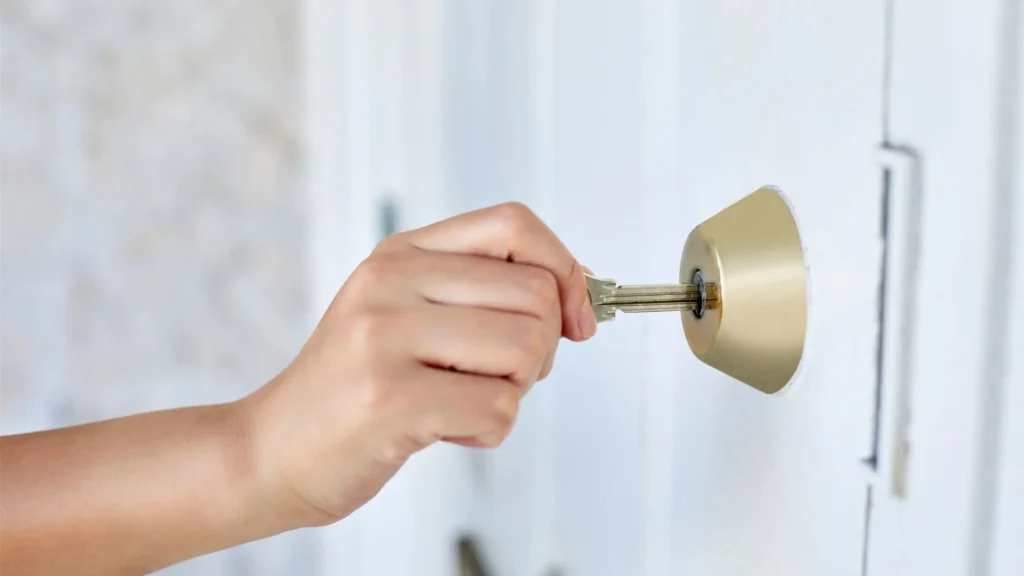
Fast and safe diagnosis in 60 seconds (without forcing)
before touching anything, breathe. What you are looking for is to distinguish between simple lock y internal breakdown:
- Does the key turn “too soft” or idle?? Internal decoupling signal.
- Is the handle “dead” or too loose?? It may be the square (bar that joins handles) loose/split.
- Do you hear the “click” of the latch but it does not release? Bad alignment, door closer past strength or blow misfit.
- Is there a loose shield or trim that rubs? Sometimes the problem is external and easy to adjust.
- Is the interior key set? If your cylinder no it has double clutch, it doesn't work from outside.
My guard protocol: don't force. If with two gentle attempts there is no progress, move on to concrete tests (next section). Brute force often turns a minor breakdown into a complete change... and makes your day difficult..
The most common causes: from cam to slip (explained clearly)
- Broken or loose cam/tailpiece: the key turns, but the cam does not “drag” the mechanism. Result: idle spin.
- Broken handle square: you turn the key but the inner lever does not move the latch.
- Slip without retraction: wear, dirt, lack of lubrication or misaligned stroke; you hear noise but it doesn't release.
- Shield or rosette poorly assembled: they rub against the cylinder and “engage” when turning.
- Cylinder without double clutch + key inside: “something” turns from outside, but it does not transmit enough force.
- Previous forcing attempt: touched bolts or damaged pin; the lock was “alive” but not functional.
In the field, I have seen everything: from a cam that fell into the lock to a poorly screwed shield after painting the door. The good news: several of these causes are resolved sin destroy anything if you act with method.
What can you try (and what you shouldn't do)
Yes try:
- Take pressure off the slip: Gently pull/push the door while turning the key; if there is misalignment, can release.
- Raise or lower the blade one millimeter: with your hand on the handle, align and test; sometimes the frame “bites” the slip.
- Carefully remove a loose trim: if you see that it rubs, correct it and try again.
- Check if there is a key inside: If there is and your cylinder is not double clutch, it's time to assist.
don't do:
- Blows in the area of the cylinder or handle “let's see if it gives way”. You break what was still whole.
- Lubricate with sticky oils (cocina, 3-in-1). They attract dust and get worse.
- Spin with improvised tools. If you damage the key or cam of the bowler hat, the arrangement becomes complicated.
When you send me one photo of the door edge by WhatsApp (slip/latch area) I usually see in seconds if the thing is an adjustment or a real breakdown.
When to call the professional and how to expedite assistance
Call yes or yes yes:
- The key turns empty several times in a row.
- Suspicions of internal break (metallic sounds, loose parts) or there is key inside and your cylinder does not “override” it.
- Es rent and you need to leave an orderly record of the incident.
So that everything goes quickly, have ready:
- DAYS y proof of occupancy (contract, receipt, census).
- Photo from the edge of the door (latch/latch) and of shield if there is.
- And short story: “the key turns soft, handle without force, no key inside”.
I work 24/7 in Tarragona, Salou and Reus. Sometimes I go in with someone if I'm nervous about a possible robbery attempt.; the first thing is you security and regain access control, documenting before and after photos.
Prevention: double clutch cylinders, alignment and basic maintenance
- Double clutch (emergency function): allows opening from the outside even if there is a key inside. Saint's hand for mistakes.
- Alignment and hit: if the slip “scratches”, the problem reappears; adjust door closer and hinges.
- Technical lubrication, no household oils: use dry or locksmith-specific lubricants, in moderation.
- Shield and hardware: check that they do not rub when turning. An extra screw can immobilize half the assembly.
- Habits: avoid slamming doors; They keep everything in place and extend the life of the mechanism.
From the workshop, when someone comes for a scare, I usually recommend reviewing the whole set (cylinder + shield + blow + door closer). Many times the “bad bowler hat” is just a adjustment pendant on the door.
Real cases in Tarragona: openings without damage and what we learned
- Takes departure: full idle rotation. We open non-invasive and replace the damaged component; it was like new.
- Loose square in old portal: “dead” handle. It was enough to reconnect and adjust the blow; no major change.
- newly painted shield: rubbed against the cylinder. Millimeter adjustment, clean opening and end.
- Key inside at dawn: without double clutch. Identity verification, technical opening and recommendation for improvement to prevent it from happening again.
Whenever there is rent, I send the tenant an email-type text to the owner: short, educated and leaving proof that the home is operational. Avoid arguments with bail.
Frequently asked questions
Can I open with a card or x-ray?
only in no-turn slips and very carefully. On modern doors or with a shield it is useless and you can damage rubber and frame..
Is it useful to hit next to the bowler?
I don't recommend it: you can break the internal mechanism or deform the door.
How do I know if I have double clutch?
Ask the installer or look at the cylinder card/code. If with a key inside another person opens from the outside with their copy, you have it.
What if it's the lock, not the bowler hat?
You can tell when the key turns on, but the manilla does not “pull” the latch/latch. The problem there is usually square the internal mechanism.
When should you change just the cylinder?
If the rest of the hardware is healthy and the problem is transmission (leva/tailpiece). If there is general wear, consider reviewing set.